No heat or no cooling right now? The emergency line is answered by a person, 24 hours a day, every day of the year. Call 000-000-0000
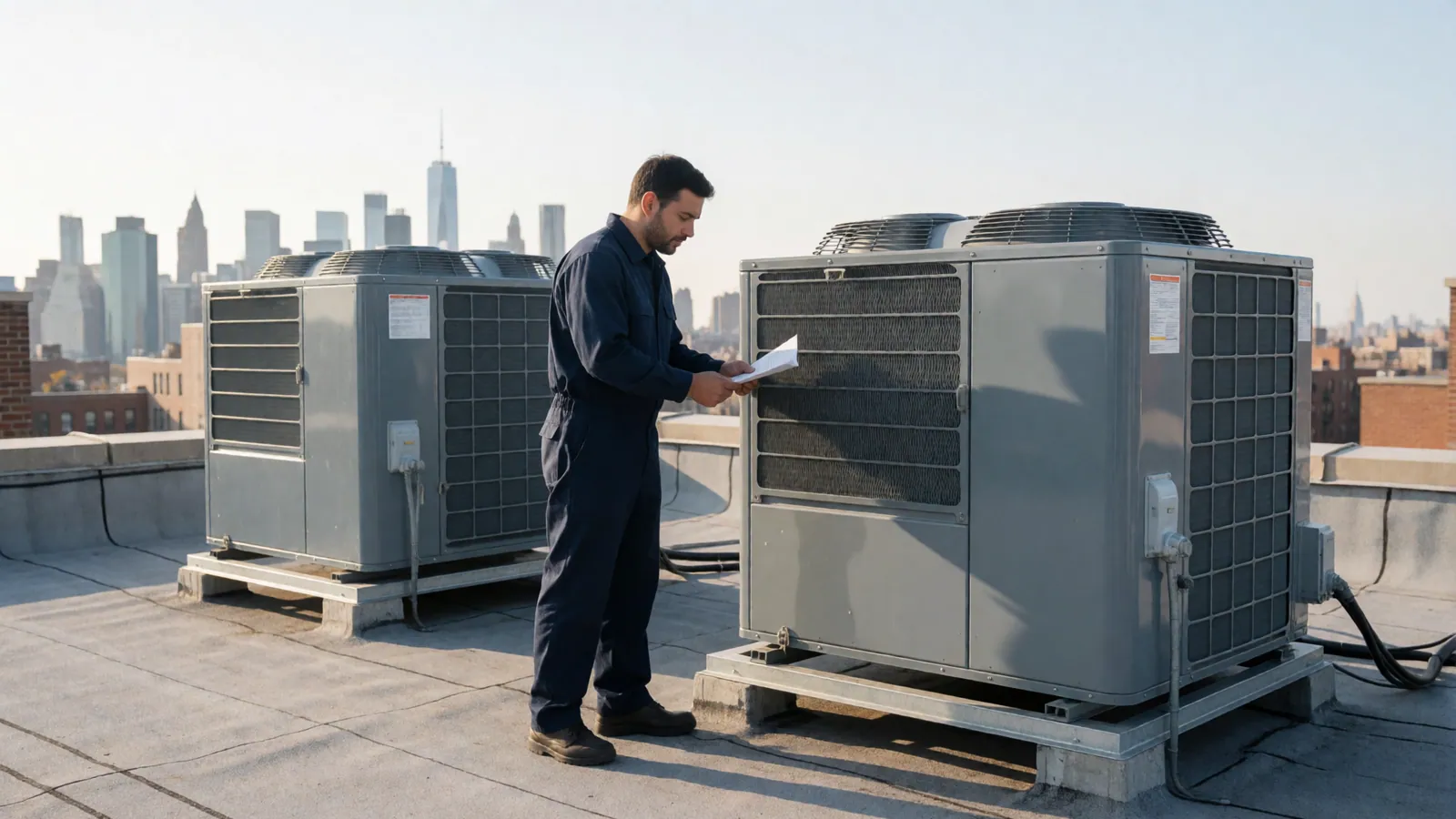
Commercial work in Queens is mostly small buildings with big consequences: a twenty-seat restaurant whose make-up air has never been balanced, a retail unit with three rooftop units where one has been failed for a year, an office over a shop where the tenant and the landlord each believe the other is responsible for the filters.
We do the unglamorous part properly — planned maintenance rotations, a written asset register, and a certificate of insurance on file with the managing agent before anyone asks for it — because in commercial work the paperwork is genuinely half the service.
What we look after
Small to mid-size commercial across western Queens, from a storefront to a six-storey building.
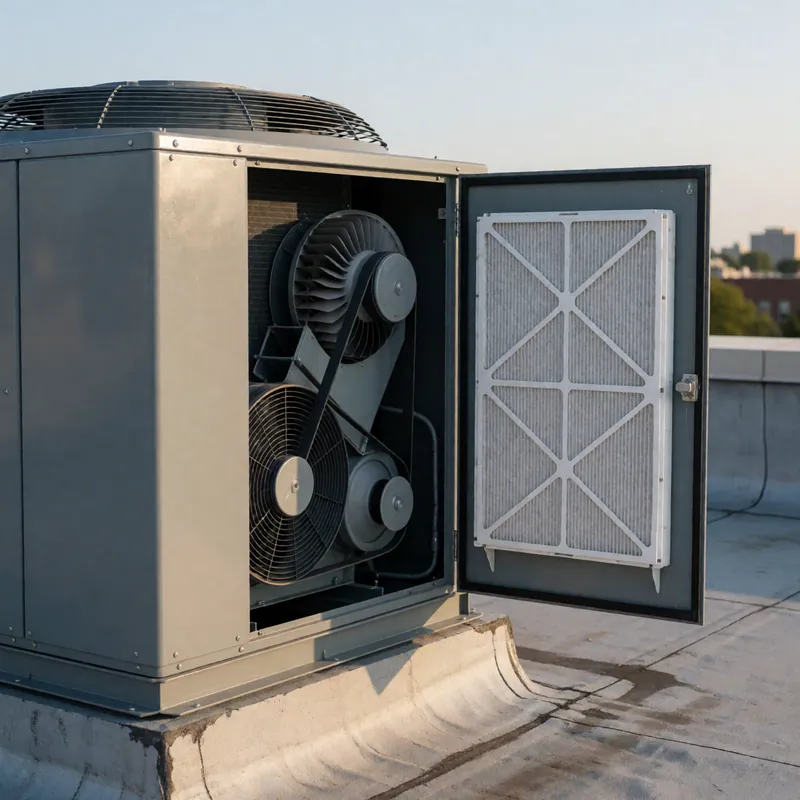
Packaged rooftop units
Service, repair, economiser setup, belts, filters, curbs and replacement, including the crane co-ordination and roof protection on a changeout.
Split and multi-split systems
Office fit-outs, retail and small suites, including VRF-style systems where several indoor units share an outdoor unit.
Make-up air and kitchen ventilation
The commonest fault in every small restaurant we attend: an exhaust hood pulling more air than the make-up unit supplies, so the building runs negative, doors are hard to open and combustion appliances struggle.
Refrigeration support
Walk-ins, reach-ins and prep tables kept running, with the same emergency response as the comfort systems.
Ventilation for cellars and plant rooms
Where code, combustion air and equipment life all depend on it.
Building controls
Schedules, setbacks, sensors and alarms, so equipment is not conditioning an empty building all weekend.
Planned maintenance for commercial buildings
Priced per unit, on a rotation that suits your trading hours rather than ours.
Quarterly or monthly rotations
Filters and belts carried on the van, so a rotation visit does not become a return visit.
Documentation that satisfies a managing agent
Per-unit condition reports, an asset register with model and serial numbers, and service history you can hand to a board or an insurer.
Written response windows
Contracted times for critical equipment — kitchen refrigeration, server rooms, anything with a load that spoils.
Capital forecasting
An annual written view of what is likely to need replacing in the next two to three years, so it lands in a budget rather than in an emergency.
Out-of-hours work by arrangement
Nights and early mornings for retail and restaurants, so we are not working through your service.
Landlords, tenants and managing agents
The three-way conversation that decides who fixes what. We are used to it and we document accordingly.
Clear scope per party
Reports written so it is unambiguous whether an item is landlord plant or tenant equipment. It saves everybody a month of correspondence.
Certificates of insurance
Issued to the building, the managing agent or the tenant, same day, in whatever form the building requires.
Condition surveys at lease events
Before a fit-out, at assignment, or at the end of a lease, so dilapidations are argued from measurements rather than memory.
Co-op and condo boards
Presentations and written recommendations for boards that need to make a capital decision without an engineer on the committee.
Questions
Commercial HVAC — the questions we are asked most
Do you offer commercial HVAC contracts in Queens?
Yes, priced per unit rather than per building, on a quarterly or monthly rotation that fits your trading hours. Contracts include written response windows for critical equipment, per-unit condition reports and an asset register your managing agent can work from.
How fast can you respond to a commercial breakdown?
Contract customers have written response windows — typically same-day for comfort systems and a few hours for refrigeration or anything with product at risk. Non-contract commercial calls are fitted in as capacity allows, which during a heatwave can mean a wait.
Can you provide a certificate of insurance for my building?
Same day, issued to the building, the managing agent or the tenant in whatever form the building requires. For contract customers it is already on file before anyone asks.
My restaurant doors are hard to open and the kitchen is smoky. Why?
The building is running negative: the exhaust hood is pulling more air out than the make-up air unit is putting back. It is the most common ventilation fault in small restaurants, it makes combustion appliances behave badly, and it is measurable and fixable.
Do you work outside business hours for retail and restaurants?
Yes, by arrangement, and for planned work we prefer it — nobody wants a technician on a ladder during service. Contracted out-of-hours rotations are scheduled at whatever time suits your trading.
Who is responsible for HVAC, the landlord or the tenant?
It depends entirely on the lease, and it is the argument we see most often. We write reports so it is unambiguous which items are landlord plant and which are tenant equipment, which usually settles it faster than the correspondence would.
Related
Often needed alongside this
Design & Commercial
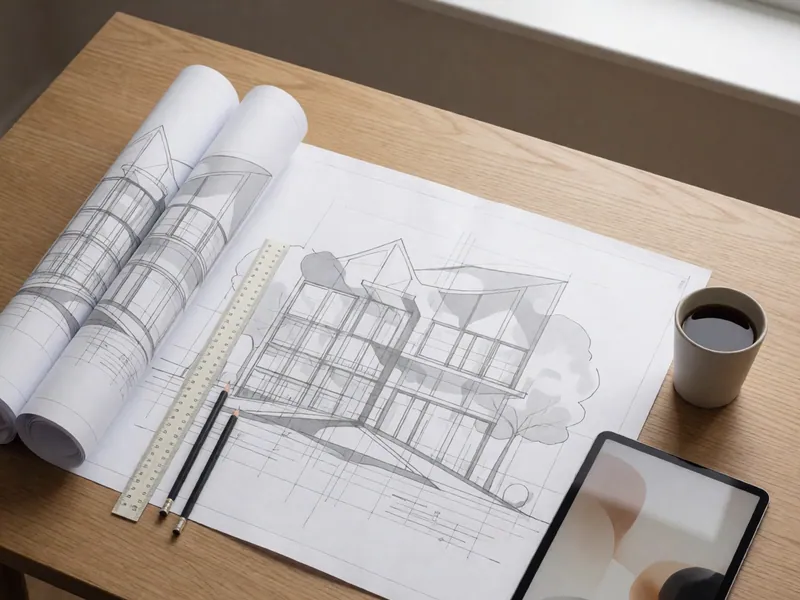
System Design & Planning
Load calculations, duct design and a written plan before anybody quotes equipment — for renovations, extensions and buildings that have never worked properly.
Read more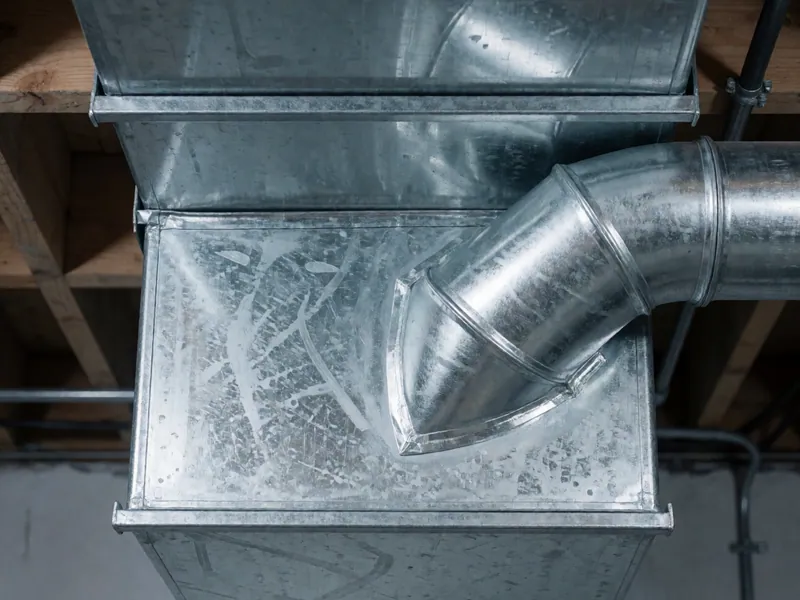
Design & Commercial
Ductwork & Air Balancing
Sealing, resizing and balancing the distribution — usually the real reason one room is always wrong and the bills are always high.
Read more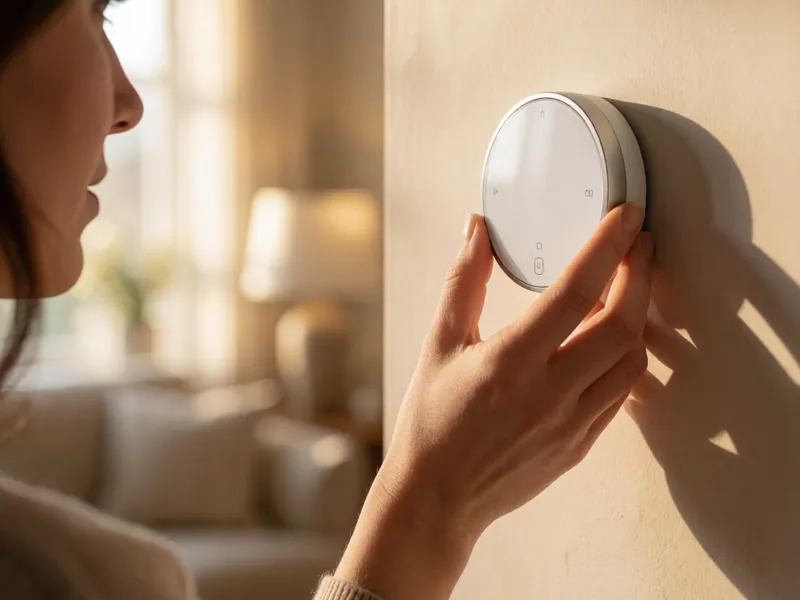
Design & Commercial
Thermostats & Zoning
Controls that suit how the building is actually used — including zoning, so upstairs and downstairs stop fighting over one thermostat.
Read moreSame-day service in most cases
Book a visit, or call the 24-hour line
Tell us what the system is doing and we will tell you honestly whether it needs somebody tonight or whether it will keep until the morning. Diagnostics are $119 and credited in full against any repair you approve.