No heat or no cooling right now? The emergency line is answered by a person, 24 hours a day, every day of the year. Call 000-000-0000
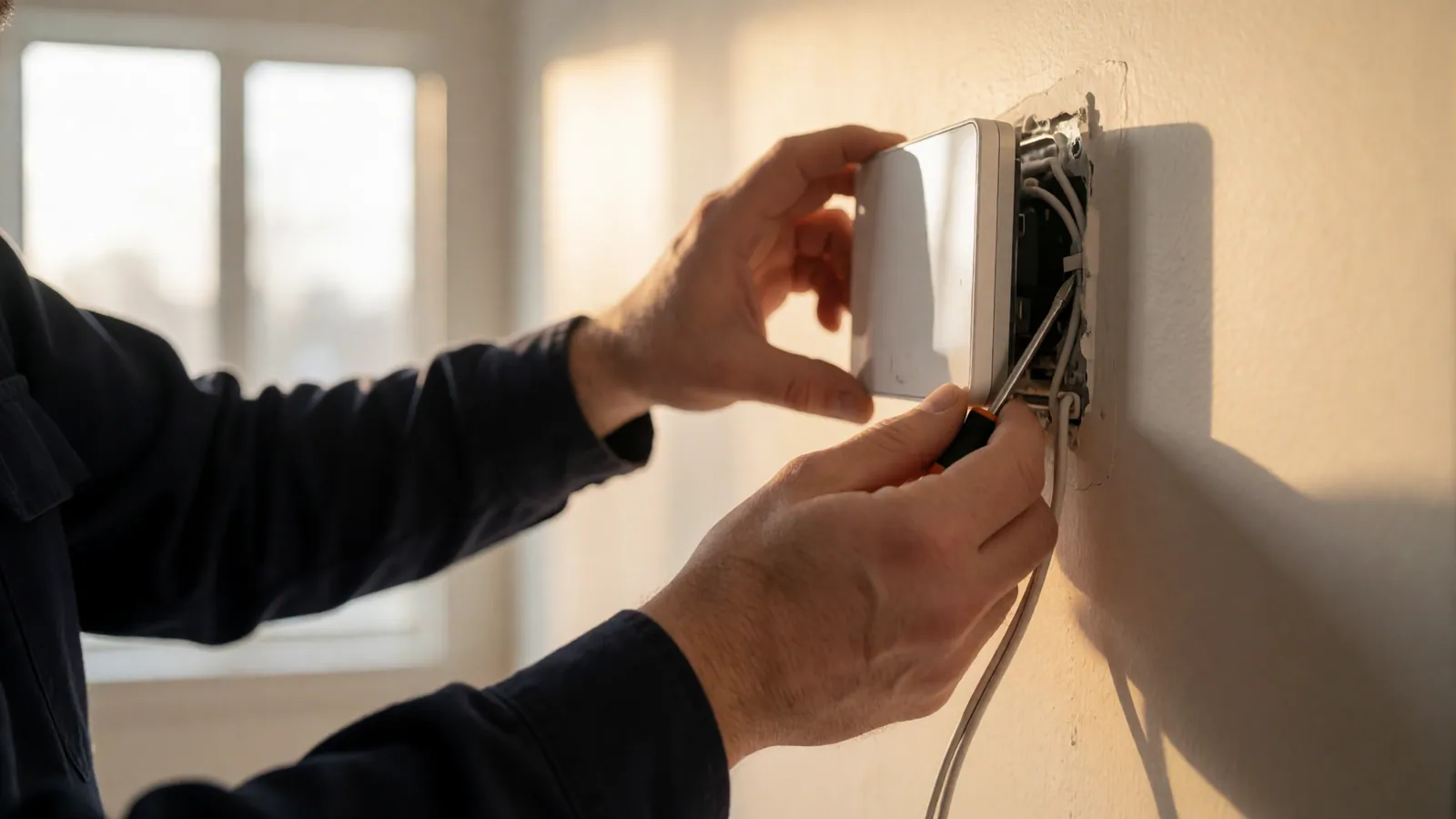
Most of the thermostat calls we attend are not thermostat failures. They are installation faults — a common wire that was never run so the device browns out, heat pump changeover configured backwards so the auxiliary heat runs when it should not, or two-stage equipment set up as single-stage so half the comfort you paid for is switched off in software.
And one thermostat in a hallway can only ever be right about the hallway. In a two- or three-storey Queens house that is the entire reason the top floor is uncomfortable, and no amount of setting adjustment fixes it. Zoning does.
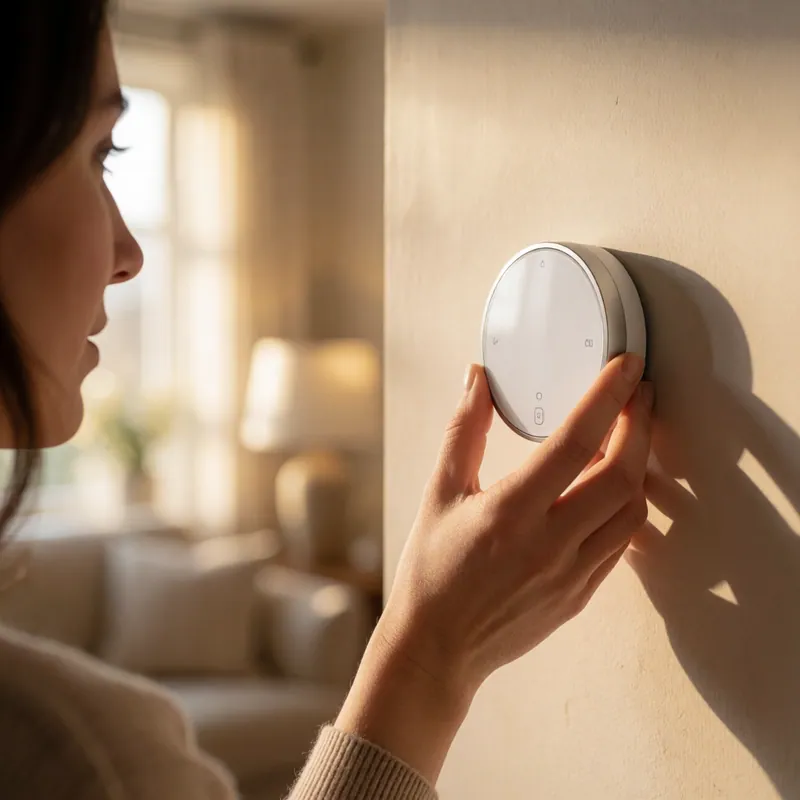
Getting a smart thermostat right
The device is the easy part. These five things are where installations go wrong.
A proper common wire
Smart thermostats need constant power. Stealing it from the heating call terminal causes intermittent faults that look like a defective device and are not. We run a C wire or fit an adapter properly.
Staging configured to the equipment
Two-stage and modulating equipment must be told what it is. Set up as single-stage it runs flat out and short-cycles, and you lose the comfort the equipment was bought for.
Heat pump changeover
Balance point, auxiliary heat lockout and emergency heat, set up so the expensive backup heat runs only when it genuinely has to. This one setting can dominate a winter electricity bill.
Location
Interior wall, away from sun, draughts, lamps and supply registers. A thermostat above a radiator is measuring the radiator.
Schedules that match the household
Set with you, in plain language, before we leave. A schedule fighting the people in the house gets overridden within a week and then everybody stops trusting it.
Zoning: when it is the right answer
Zoning divides one system into independently controlled areas with motorised dampers and a control panel.
Two- and three-storey houses
Heat rises. One thermostat downstairs guarantees the top floor is wrong, in both seasons and in opposite directions.
Finished attics and basements
Loads that behave nothing like the rest of the house and were never part of the original design.
Rooms used at different times
A home office occupied all day and bedrooms occupied at night do not need conditioning on the same schedule.
Extensions and additions
Rather than upsizing the whole system for a room that is used a few hours a day.
When zoning is the wrong answer
On a single-stage system with no bypass or variable-speed capability, closing zones raises static pressure and can freeze a coil. If your equipment cannot support it we will say so and suggest a mini-split instead.
Commercial controls
Small commercial buildings frequently have good equipment running on controls nobody has looked at since it was commissioned.
Programmable and networked controls
Occupancy schedules, setback, lockouts and remote visibility across several rooftop units.
Economiser setup and repair
Free cooling from outside air, and the single most commonly broken control on any rooftop unit in this city. Repairing one usually pays for itself within a season.
Demand-controlled ventilation
CO2 sensors modulating outside air to occupancy rather than running full fresh air into an empty room all day.
Sensors and alarms
Space, discharge and outside air sensors, with alarms that reach somebody before the tenant does.
Questions
Thermostats & Zoning — the questions we are asked most
Will a smart thermostat save me money?
Modestly, mostly through schedules and setbacks you would not maintain by hand. The bigger savings come from correct configuration — heat pump changeover and auxiliary heat lockout set up properly can dominate a winter bill in a way the brand of thermostat never will.
Why does my smart thermostat keep losing power or restarting?
Almost always a missing common wire. The device is scavenging power through the heating call circuit, which browns it out under load. It is a wiring problem rather than a faulty device, and it is straightforward to fix.
What is HVAC zoning?
Splitting one heating and cooling system into separately controlled areas using motorised dampers and a control panel, so each zone has its own thermostat. It is the standard fix for a multi-storey house where one floor is always wrong.
How much does zoning cost?
A two-zone retrofit runs from about $3,400 including dampers, panel, sensors and balancing, with roughly $1,100 for each additional zone. It depends heavily on how accessible the ductwork is.
Can I zone any system?
Not safely. Zoning restricts airflow when zones close, so the equipment needs variable-speed capability or a bypass arrangement. On an older single-stage system, zoning can freeze the coil or trip the furnace on high limit, and a ductless head is usually the better answer.
Can I install a thermostat myself?
You can, and half the intermittent control faults we attend were installed that way. Modern equipment has staging, changeover and auxiliary heat settings that are not obvious from the app, and getting them wrong is expensive rather than merely annoying.
Related
Often needed alongside this
Design & Commercial
System Design & Planning
Load calculations, duct design and a written plan before anybody quotes equipment — for renovations, extensions and buildings that have never worked properly.
Read more
Design & Commercial
Ductwork & Air Balancing
Sealing, resizing and balancing the distribution — usually the real reason one room is always wrong and the bills are always high.
Read more
Design & Commercial
Commercial HVAC
Rooftop units, split systems and make-up air for the restaurants, shops, offices and buildings of western Queens — on contract or on call.
Read moreSame-day service in most cases
Book a visit, or call the 24-hour line
Tell us what the system is doing and we will tell you honestly whether it needs somebody tonight or whether it will keep until the morning. Diagnostics are $119 and credited in full against any repair you approve.