No heat or no cooling right now? The emergency line is answered by a person, 24 hours a day, every day of the year. Call 000-000-0000
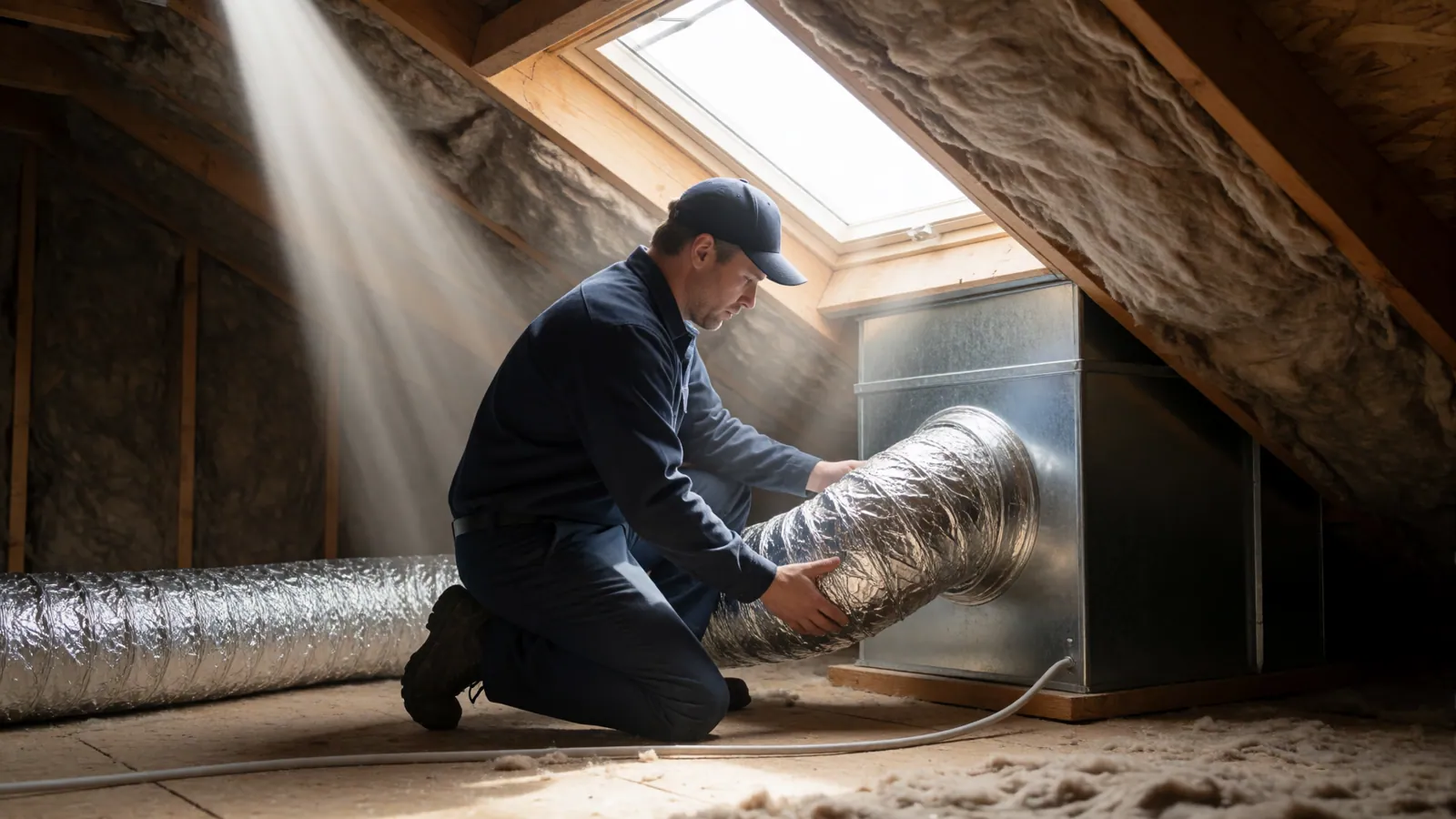
Duct leakage in a typical older Queens house runs between a fifth and a third of everything the equipment produces. In an attic or a crawlspace, that is conditioned air you paid for, delivered to a space nobody occupies — and worse, the return side pulls the same volume back in from wherever it happens to be, which is how attic dust and crawlspace damp end up in your bedroom.
The good news is that this is measurable and it is fixable, usually for less than the price of the equipment upgrade people reach for first.
What we find, over and over
Six faults account for the overwhelming majority of distribution problems in this housing stock.
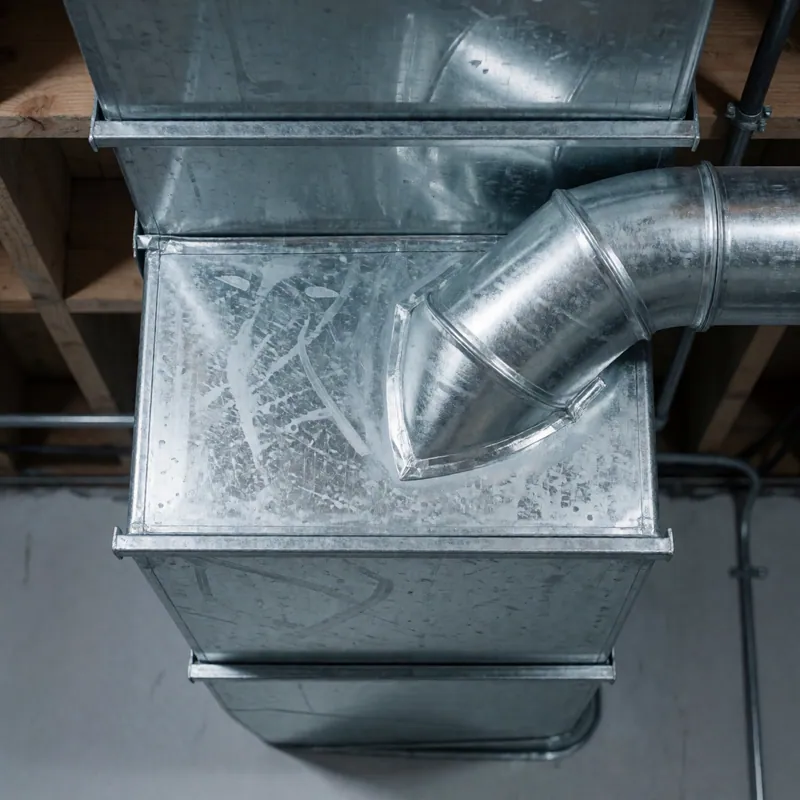
Leaking joints and unsealed boots
Especially where a register boot meets the floor or ceiling. Mastic and mesh, not fabric duct tape, which dries out and lets go within a few years.
Crushed and kinked flex duct
Flexible duct pinched behind a joist or run in long lazy curves has a fraction of its rated capacity. Straightened, supported and shortened, or replaced with rigid pipe.
Undersized returns
The commonest fault of all. Plenty of supply and one small return means high static pressure, a struggling blower and rooms that will not balance whatever you do at the register.
Uninsulated duct in unconditioned space
Duct in an attic in August loses so much capacity that the register barely delivers cool air. Insulating it is inexpensive and immediately noticeable.
Missing or seized dampers
You cannot balance a system without working dampers. We fit them at the branches where they belong, rather than asking you to crank registers half shut.
Return air pulled from the wrong place
A return in a garage, a basement with a fuel-burning appliance, or a duct chase open to the attic. This is a safety and air quality problem, not a comfort one.
How balancing actually works
Measured, adjusted, and measured again. It is a methodical afternoon rather than a mystery.
Measure total system airflow first
Static pressure and blower performance. If the system as a whole cannot move the air, no amount of damper adjustment will fix a room.
Measure at every register
Flow hood readings room by room, compared against what the design or the load calculation says each room needs.
Adjust at the branch dampers
Not at the register grille. Closing a register throws the air noisily and does very little to redistribute it.
Re-measure and record
Final figures room by room, on paper, so any future contractor knows what this system is supposed to do.
Address the causes, not the symptoms
If a room cannot be balanced because its branch is too small, we will say so and price the fix rather than pretending a damper solved it.
What we build
Fabricated in our own shop on Queens Boulevard, which is why we can make an odd transition rather than forcing a standard fitting into a space it does not suit.
Rigid sheet metal trunk and branch
Sealed, insulated where it belongs, and sized to a static pressure budget rather than to whatever fits.
Custom transitions and plenums
Made to the space. Pre-war framing rarely accommodates catalogue fittings.
High-velocity small-duct systems
Where conventional duct simply will not go without ruining the ceilings.
Zoning dampers and controls
Motorised dampers with bypass or variable-speed control, so upstairs and downstairs stop fighting each other.
Questions
Ductwork & Air Balancing — the questions we are asked most
Why is one room always hotter or colder than the rest?
Nine times out of ten it is distribution: a crushed flex run, a branch that is too small, a missing damper, or a return that cannot pull enough air back out of the room. Occasionally it is the room itself — a big west-facing window or a wall with no insulation. We measure before deciding which.
How much air am I losing through duct leaks?
In a typical older Queens house with duct in an attic or crawlspace, commonly twenty to thirty percent. It is a large number, it is directly on your bill, and sealing is usually the highest-return work available on the whole system.
Is duct sealing better than duct cleaning?
For comfort and for running cost, considerably — and often for air quality too, since a leaky return draws unfiltered attic or crawlspace air straight into the system. Cleaning removes what is there today; sealing stops it arriving.
What is air balancing?
Measuring the airflow at every register and adjusting the branch dampers until each room gets the share the load calculation says it needs. It is a methodical process with a flow hood, and it is the last step of any installation done properly.
Can you add ductwork to a finished house?
Often yes, though the route matters more than the equipment. Where conventional duct will not fit without wrecking ceilings, high-velocity small-duct systems or ductless heads are the usual answers, and we will tell you which your building suits.
Should I close vents in rooms I do not use?
Generally no. It raises static pressure across the whole system, which reduces total airflow and can freeze a coil or overheat a furnace. If you genuinely want to shut a zone down, the correct way is zoning dampers and controls.
Related
Often needed alongside this
Design & Commercial
System Design & Planning
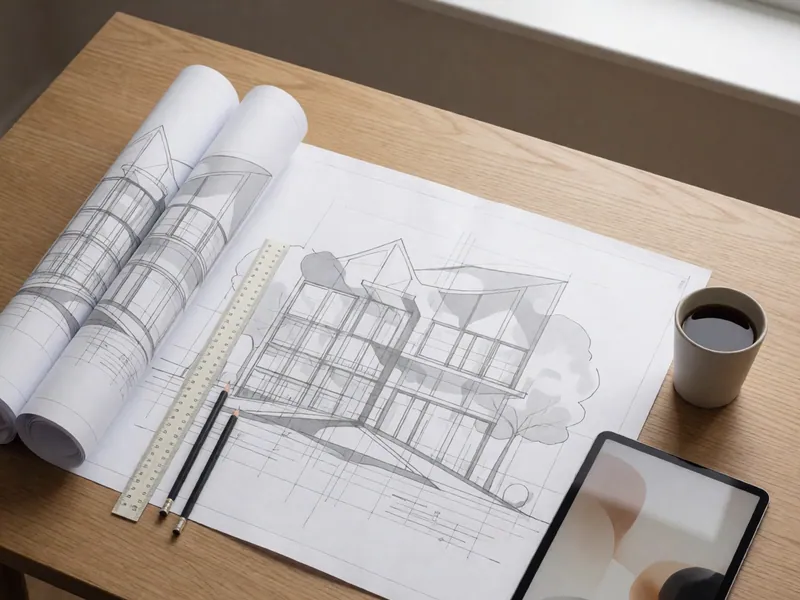
Load calculations, duct design and a written plan before anybody quotes equipment — for renovations, extensions and buildings that have never worked properly.
Read more
Design & Commercial
Thermostats & Zoning
Controls that suit how the building is actually used — including zoning, so upstairs and downstairs stop fighting over one thermostat.
Read more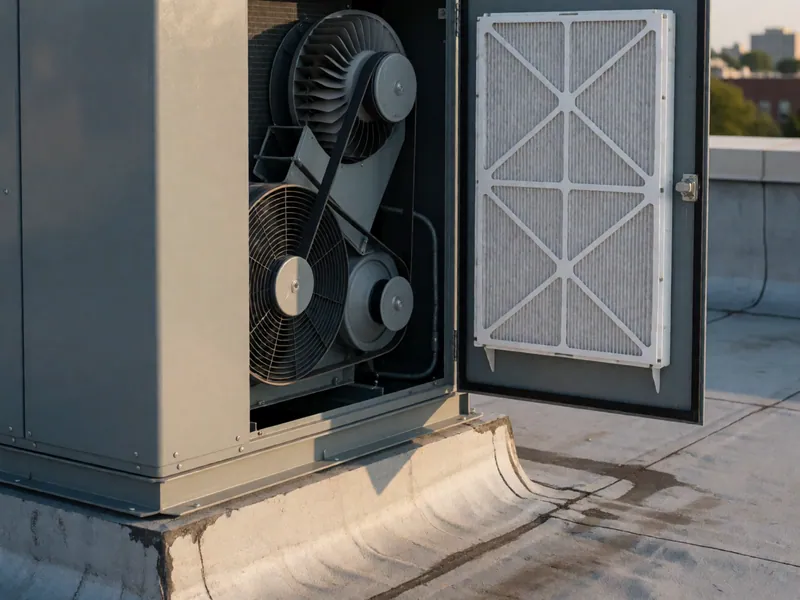
Design & Commercial
Commercial HVAC
Rooftop units, split systems and make-up air for the restaurants, shops, offices and buildings of western Queens — on contract or on call.
Read moreSame-day service in most cases
Book a visit, or call the 24-hour line
Tell us what the system is doing and we will tell you honestly whether it needs somebody tonight or whether it will keep until the morning. Diagnostics are $119 and credited in full against any repair you approve.