No heat or no cooling right now? The emergency line is answered by a person, 24 hours a day, every day of the year. Call 000-000-0000
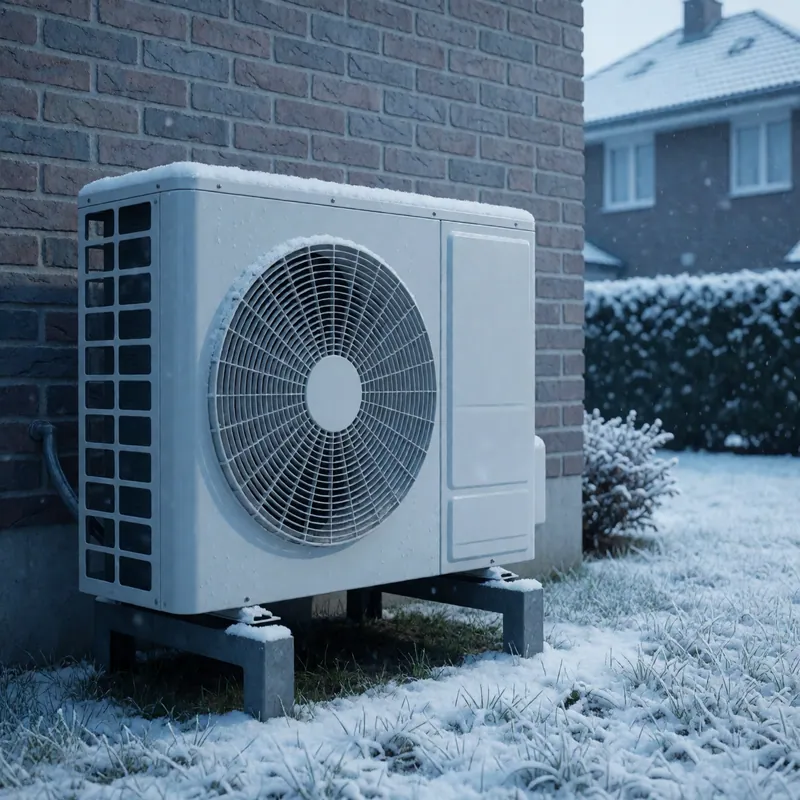
Heat pumps have a reputation problem in the north-east that is about fifteen years out of date. The systems people remember struggled below forty degrees and handed over to a strip heater that ate the electricity bill. Cold-climate equipment does not do that; it produces rated capacity down to five degrees and keeps producing useful heat well below zero.
That said, we will not sell you one on ideology. If you have a well-maintained gas boiler and a building with no cooling load worth speaking of, the honest answer is often to keep it and revisit at end of life. Where a heat pump genuinely wins, we will show you the running-cost arithmetic rather than asking you to take it on faith.
Which configuration suits your building
There are four ways this is normally done in Queens, and the right one depends on what heat you have now and what you want to keep.
Ducted central heat pump
Replaces both the furnace and the AC where good duct already exists. One system, one thermostat, cooling included.
Ductless multi-zone heat pump
Room-by-room, no duct, independent control. The default in pre-war houses and two-family buildings.
Dual-fuel hybrid
Heat pump for most of the year with the existing gas furnace taking over in the coldest snap. The controls choose automatically by outdoor temperature.
Air-to-water for hydronic homes
Where the building has radiators or radiant floors worth keeping, a heat pump can feed the water loop instead of a boiler.
What we check before quoting
Heat pump projects fail on the survey, not the equipment. These are the four things that decide whether a project is straightforward or needs staging.
Electrical capacity
A heat pump needs a dedicated circuit and sometimes a service upgrade. We check the panel on the survey rather than discovering it on installation day.
The building envelope
Air sealing and attic insulation are almost always cheaper per degree than extra capacity. Where that is true we will say so, even though it makes our quote smaller.
Existing distribution
Ducts sized for a furnace often need modification for the higher airflow a heat pump wants. Radiators sized for 180-degree water may need attention for a lower-temperature system.
Where the outdoor unit can live
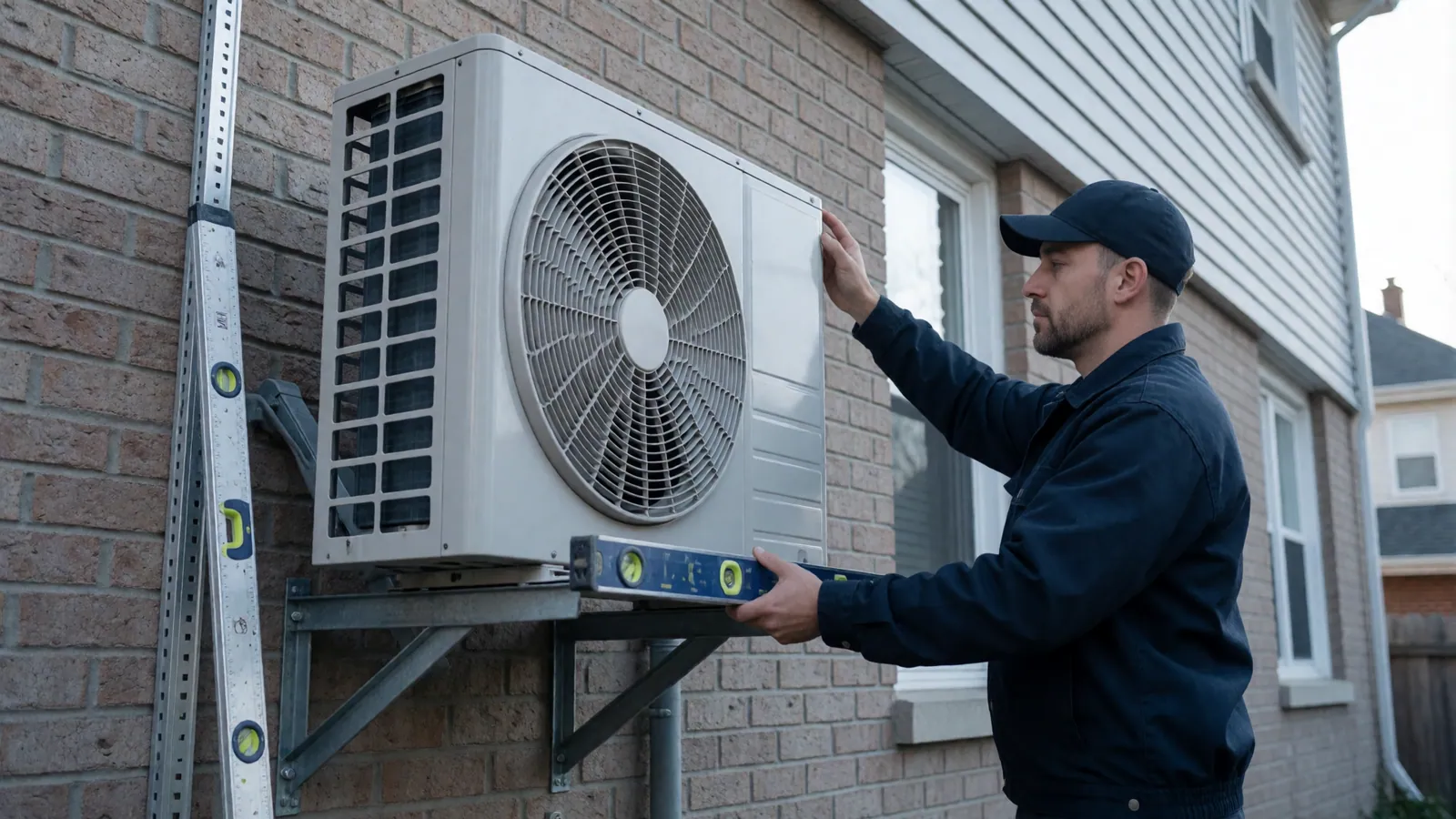
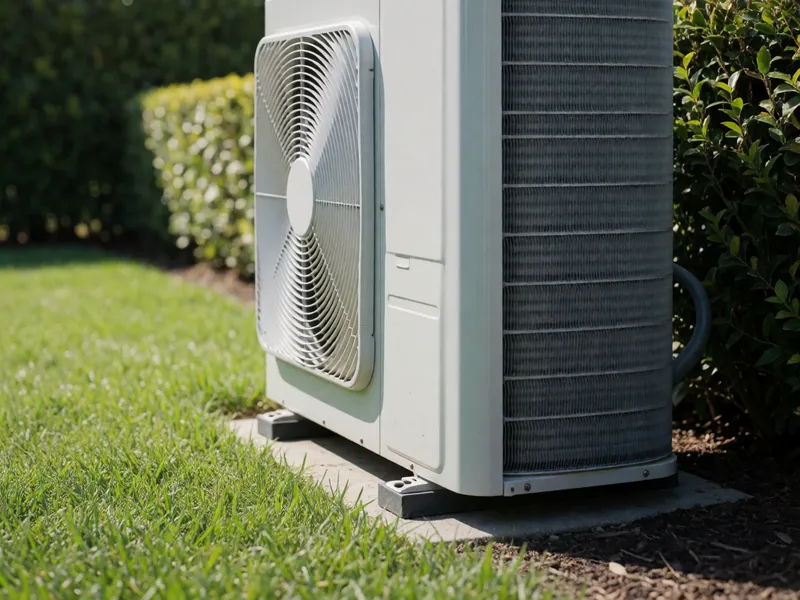
Clear of snow drift, clear of the neighbour's window, on brackets or a raised stand, with a defrost drain that will not turn the side alley into an ice rink.
Rebates, credits and what they are actually worth
This is the part most contractors wave at and few handle. We prepare the documentation, and we quote you both the gross and the net figure.
Federal tax credit
A percentage of qualifying equipment and installation cost, claimed on your return, subject to annual caps and efficiency thresholds.
State and utility incentives
New York State and the local utility both run heat pump programmes with per-ton or per-project payments, often paid to the contractor and deducted from your invoice.
Low-interest financing
Programme financing for qualifying efficiency work, which frequently beats a home equity line for a project this size.
The paperwork
Equipment listings, efficiency documentation, installer credentials and the submission itself. We do it. An incentive you did not claim is not an incentive.
Questions
Heat Pumps — the questions we are asked most
Do heat pumps work in New York winters?
Cold-climate models do, and well. They hold rated capacity down to about 5°F and continue producing useful heat below that. The systems that struggled in the cold and handed over to expensive backup heat are a generation of equipment that is no longer what we install.
Is a heat pump cheaper to run than gas heat?
Against electric resistance heat, dramatically — usually a third to a quarter of the running cost. Against a modern high-efficiency gas furnace it is closer, and it moves with electricity and gas prices. We run the arithmetic on your actual usage rather than quoting a national average.
What rebates are available for a heat pump in Queens?
Typically a federal tax credit on qualifying equipment plus a state or utility incentive that is often paid directly against the invoice, and low-interest programme financing. Amounts and thresholds change, so we confirm what your specific project qualifies for at quote time and prepare the submission.
Can I keep my gas furnace and add a heat pump?
Yes — that is a dual-fuel hybrid, and it is an excellent option in a house with a serviceable furnace. Controls run the heat pump whenever it is the cheaper source and hand over to gas in the deepest cold, automatically.
Will I need an electrical service upgrade?
Sometimes. A heat pump needs a dedicated circuit, and older Queens houses on a 100-amp service with an electric range and a dryer can be tight. We check the panel during the survey and quote any upgrade up front rather than finding it on the day.
How long does a heat pump last?
Fifteen to twenty years with annual maintenance, comparable to a good air conditioner. Because it now runs in both seasons, the maintenance matters more than it did when the same box only worked four months a year.
Related
Often needed alongside this
Cooling
AC Installation
Central air conditioning sized properly for your building, installed by our own crews, with the permit work and the electrical handled.
Read more
Cooling
AC Repair
Same-day diagnosis and flat-rate repair when the cooling stops — with the diagnostic fee credited against the work.
Read more
Cooling
Ductless Mini-Splits
Room-by-room heating and cooling with no ductwork — the practical answer for pre-war houses, converted attics and two-family homes.
Read moreSame-day service in most cases
Book a visit, or call the 24-hour line
Tell us what the system is doing and we will tell you honestly whether it needs somebody tonight or whether it will keep until the morning. Diagnostics are $119 and credited in full against any repair you approve.